Thursday, January 17, 2013

Episode of Wife Swap


Digital Culture (High Maintenance) Vs. Pilgrim lifestyle (Low Maintenance)


The other day I was channel surfing on my television and came across the show Wife Swap.  The topic of the episode was showing different sides of the rector scale (One with a modern lifestyle and lots of money and the other living the lifestyle of pilgrims). 

One family live in a wood cabin in the forest with no modern appliances or even electricity.  Living a green style life was very important to them.  They went as far as the whole family bathing in the same bath water.  They never flush the toilet and use a bucket of bath water to help the toilet flush.  The mom said she hadn't shaved her armpits in weeks.


The point of this blog entry is that seeing the total opposite of modern life made me feel bad I was using electricity to light up my room, run my fish tank and to help me watch this show on television.


The wife of the other family was totally obsessed with appearance of herself and her house.  She had the house built around a 10,000 dollar chandelier.  The father worked as a computer software consultant and let the kids play on the computer whenever they wanted.  The mom would spend over $500 just on the kids clothes during every mall visit.  Contrasting the with the other family, they go to the thrift store and spend under $10.00 on used clothes.  They wash them every two weeks and wear the same thing everyday.  Without electricity, they would wear flashlight headbands to                                                          do everyday choirs and play boardgames.

 They're family entertainment was making candles out fresh wax.
Once the wives swapped places, hell broke loose in the homes.  Each side were stern about changing the lifestyle of the other family.  During the end of the episode, the modern family wife wired the Pilgrims home with electric lighting and bought the families daughters a digital camera.  The daughters were frustrated that this new wife cared only about commercialism and rejected the camera.  The father was angry about the electricity invading their home, it being a waste of energy.  The father quickly unplugged all lights and threw them out the window; telling her to leave.

The episode trailer is below: Starting at 1:00 is shows what each wife thinks of their temporary new family lifestyle

http://www.youtube.com/watch?v=dXq0NCQb0eM

Basically, If you didn't have today's modern electricity or digital electronics, could you handle it?

What is your take on how each wife reacted to their temporary new lifestyle?

Wednesday, January 16, 2013

A Critical Look At Cyberspace


A Critical Look At Cyberspace


Cyberspace consists of digital multimedia and information sources that are today called "The Infamous Cloud."  When computer owners around the globe let the computer's Internet softwares seek for information, it is like an invisible cloud that starts raining information.  Cyberspace is such an advanced phenomenon that they used to call it "The Information Highway." 
 
Fast forward to the 2000's, our generation is more social and computer savvy.  Search Engines like Google, Bing and MSN allow computer users to seek out information including pictures and videos.  These search engines allow you to keep an email profile while searching the web for information.  During the beginning of the search engine era, Webcrawler was the most used.  Other search engines include: Yahoo, Northern Lights and Lycos.


Search Engines today are not just for research, but can be used for shopping online.  Sites like eBay are a platform for buying and selling items online.  A clone of eBay called Craigslist came shortly after and included interactive chat.  Websites like this are not always trustworthy because the item you're buying might not even compare to its photo or listing.  People edit a product's description to make someone want it more.  This concept has expanded from eBay to include websites just dedicated to one type of item.  Websites like Zappos, Shoe-Envy, CutesyGirl or ShoeShow, are all websites dedicated to buying shoes.

The Digital Divide

Countries like Europe and Africa suffer from the Digital Divide.  Many cultures around the world because of their norms do not allow Internet access.  This is broken down into three layers: the Global Divide, the social divide and the democratic divide.

Identity Crisis

Cyberspace is a land of identity opportunity.  Sometimes this is good and sometimes this is bad.  Social websites like Twitter and Facebook are profile platforms that allow someone to explain who they are and chat with friends.  This allows people to portray or not portray their true self.  Many people have trouble separating their Internet self from their real self and this is an identity crisis.  Many who spend too much time online can take their Internet self and make it their real self.    Creating a fake profile of yourself can be damaging to others because they believe you and feel emotionally connected to the user's profile.

 When addicted to your cyberself one can loose touch with their realness, lending characteristics of the online with the human personality.  Acting a different race on a chat or having a fake profile showing that you are of that race or culture, can lead to you changing your social behavior in real social situations. Learning how to balance your cyberself, even if you are telling the truth, from your real self is a hard life skill that must be learned because cyberspace today is the main medium of communication.

The show on MTV called Catfish shows how fake profiles online can lead to real life indemnity crisis and emotional crisis for the friends.


Tell Me Your A.S.L Please!

These initials have become the common question that is asked first thing during a cyberspace interaction.  These initials stand for Age, Sex, and Location.  Someone asking this on a chatroom is intending your answer truthfully, but the digital culture and the Internet allow freedom of imagination.  The rest of the dialogue of a chat is based on how you answer these minor questions.  When asked about the weather where you live, you can be in any climate you want.  Being a good liar is a skill needed because follow up questions are based on what you say.  For example, if you say its snowing in Miami, you better know how to convince someone or answer truthfully.  A chat conversation is based on the connection between facts and knowledge of the subject.  If someone lies and the facts don't add up then everyone can tell you're a bad liar.  The fun thing about chatting is if you want to be an alien from Mars, you can be by saying something like  (Age 203, Female, Mars).

On some social groups online participants can create their life anyway they wish.  Examples of websites like this include Second Life and a computer game called SIMS.


Virtual Self

A video game is a digital story that incorporates a set of responsibilities to perform the chosen game.  The subject matter is endless and gives the gamer the opportunity to be whatever they want.  From platform games like Mario, to movie games like Indiana Jones and Jurassic Park, gamers can be a character of choice.  Being a fighter, driver, super hero or even a dinosaur, lets gamers experience different roles.  Video games let someone have skills they don't have in real life.  These fantasy type worlds are like the cyberspace chats where you can be who you desire, but playing a video game too much can lead to social problems and real life emotional stress. 


Thursday, January 10, 2013

Growing up Digital

Growing Up Digital

Meet Nathan Schulman

I am Nathan Schulman, born and raised in Atlanta, Georgia.  I was born on August 21, 1983, in the suburbs of Fulton County. My religion is Judaism. I enrolled at Reinhardt University (then known as Reinhardt College) in 2004. After a few years completing the core courses, I declared my major as Visual Arts/Communications.


Early Digital Culture

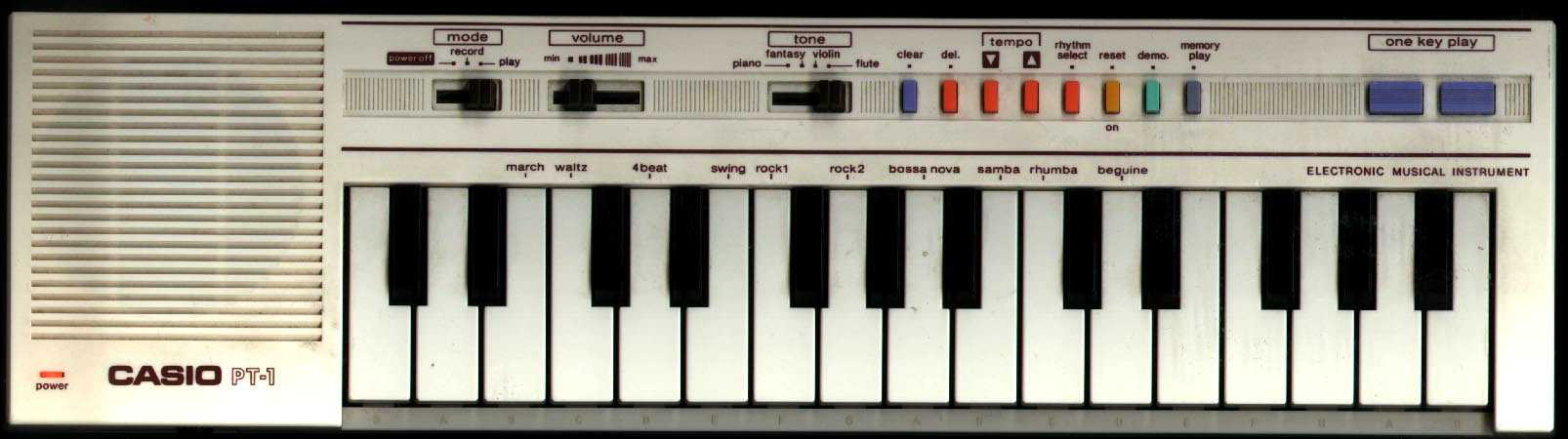
Being born during the 1980s, all things digital were already taking over the music scene and personal electronics. When I was a toddler, I had a synthesizer (aka digital keyboard piano) by Casio. I enjoyed hearing the sounds and rhythms that this electronic piano made. As I grew older, I started to own more and more digital trend items like the remote control car and alarm-clock radio. I enjoyed the remote control car as a kid.


Digital Gaming World


When digital culture became a mainstream desire, I saw video game consoles in restaurants and at amusement parks. Shortly, miniature versions of these arcade games were made for household use. When the Nintendo system came out, I was excited and played it all the time with my friends. I had it hooked up to an old television set with ear antennas.   I was a huge Mario Brothers fan and played it often. I was also addicted to The Claw Machines and Skeet Ball in arcades.  I became a great pinball player too.

For kids of the 90's, these game consoles were a new social tool.  Having fun compotisions through these games helped kids of all ages forget the stresses of their childhood and family life.  Friends would call eachother and hang together to play the assortment of games.  This escape from reality for a few hours was like therapy for kids who had problems communicating with their parents.  Kids looked up to the games characters as an early form of today's online profile.  Kids wanted to become this characters and learn all the skills they could.  I was one of these kids, was looking  forward to becoming Mario or Spiterman for an afternoon.


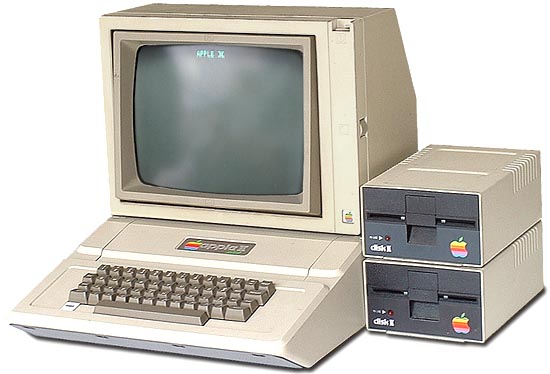
I had the first personal computer called Apple II. This computer did not have an operating system, but a floppy drive for games and office software. Most of the games were not in multi-color and were presented in just green. As I grew up, I owned and witnessed the invention of the operating system. I owned computers that had Microsoft Windows 3.1, 1995, and Windows XP. As graphics became enhanced, I began to play computer games and chat online. I used the early AOL to check email and text with friends. I was addicted to instant messaging and creating an account on all softwares possible (Yahoo Messenger, MSN Chat, MIRC).

indexlogo

When chatting platforms became more advanced and included Javascript and chat rooms, I became a computer nerd and searched for chats that were of interest. A software by Microsoft called Internet Relay Chat became my favorite place to stay social. It was a global platform software that could connect to chatrooms all over the world on a multitude of servers. With this software, you could download music and videos while chatting with peers. This was different for me than instant messaging because the majority of the users were from around the world with different ways of communicating. I never made friends on this software; I just witnessed and participated in conversations of interest. Mirc also was a language of its own, almost a precursor to current day Twitter with a more script-like language.

Current Digital Culture


As I used my personal computer, I became aware of new websites that were created for personal profiles and chats. I became a member of Myspace and enjoyed creating my own profile that included a music playlist. I never became a member of Facebook.


Smaller is Better


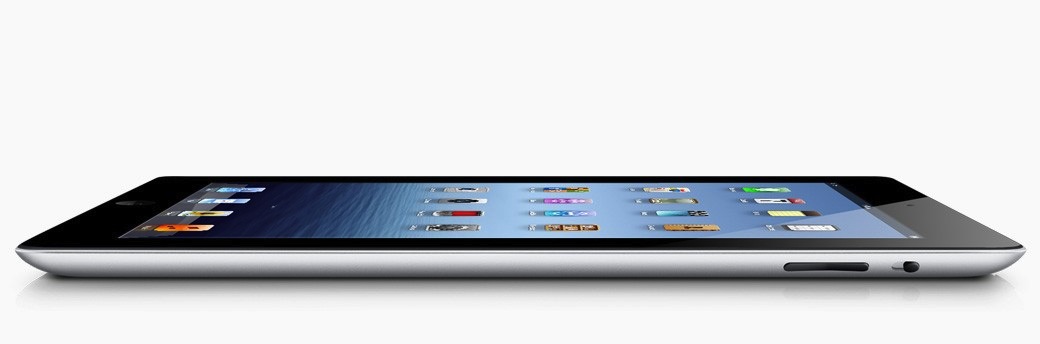
I have witnessed technology becoming more compatible and user-friendly. Desktop computers have shrunk to include laptops, notebook tablets and Apple products. Hewlett-Packard, Dell, and Apple have mastered the idea of "Smaller is Better." These companies are also on top of current trends, improving their products every few months. My dad has always been loyal to Dell and my family has had many Dell products including a laptop. I owned the first generation I-Pod by Apple as well as the first generation Microsoft mp3 player. These items are relics in today's market. Apple has released an I-Pad line of skinny handheld devices. They let you do everything your laptop does, but weigh less and are portable.

Witnessing Other Forms of Digital Culture

As a child I was able to witness how digital culture changed transit systems like airport information panels and trains telling you the next stop. I also witnessed hotel room keys becoming digital. When I was young, you got a real key. Today you receive a plastic card that stores information of your stay while opening to your room with a digital reader slot.


Animatronics and Today's Motion Picture Culture
 
One of the main focuses of digital culture is to entertain us. Amusement parks and cinematography have become one collaborative enterprise that fulfills all our senses.  Rollercosters are more elaborate with digital soundtracks and life-like movement.  Other amusement rides have speed control while incorporating 2D, 3D and even 4D cinematography.  Animatronics are digital computer enhanced robots that make amusement parks more modern and endless on subject matter.  New rides like the World of Harry Potter incorporate interactive motion picture with amazing simulation effects.  These rides transport you into the digital world of movies and imagination.

 
Modern Network and Internet Connections

The idea of wireless electronics has become a huge trend in the last decade.  I have lived through the changing from 56k modem to DSL, network lane-lines (T1 and T2), and currently the new wireless connections.  Wireless lines are way more improved from the 56k modem lines that used your phone service.  These faster lines can handle upwards of a gigabyte per second.

A Helpfull Tool 

New inventions like the thumb drive have made briefcases and data CDs obsolete.  All of your computer files can be put on a portable thumb drive making carrying a handful of file folders a stress of the past.


A Few Current Trends


Today the digital app market on the IPhone, IPad, and Android devices has become a major trendsetter.  These softwares can do anything you can think of like GPS, turn on your lights at home, find local restaurants, do mobile banking and more.  On the same note, another current trend is online banking and apps for Turbotax,  Chase Mobile, Bank of America, Starbucks Coffee lingo, just to name a few.


In the recent decade a digital vocal augmentation called "Auto Tone" has become common among R&B, pop and hip hop artists.  This device lets a singer sound robotic, but the effect is small enough that you can still hear the singer's normal voice.  Just about every artist on the radio these days has used "Auto Tone" for one of their hits.

Conclusion

With the wide variety of tools in the realm of digital culture we are able to connect faster, plain things easier, catch a airplane on time, pay bills online, video chat and remix music to create a fun new track.  Besides just our business uses of digital tools, professional fields have also advanced. Here are some current things happening due to digital and social media: radio stations now use mp3 format to play music without the hassle of changing discs, DJs no longer use vinyl at clubs, industrial factories are using technology to get more products out quicker and more efficiently, setting appointments and conferencing can be done over our smart phones.

Overall I think that cyberspace and digital culture is ever changing. I am amazed at the current state of digital culture and can't wait for what is to come

Friday, November 30, 2012

Year of China Events


The first event I attended at Reinhardt University for the Year of China was a small festival called "Year of the Dragon at Reinhardt."    This festival was held in the middle grassy area between the campus lunchroom called "The Gordy" and the campus library.  The festival was an eight to ten booth event focusing on everything that had to do with Chinese Culture.  Music of China was played over loudspeakers from the campus bookstore during the event. 

Many of the booths at the festival had games and crafting including taspestry that you could design with your name written in Chinese lettering. There were also booths selling Chinese tapestry made laptop bags, chimes, shirts, earrings and much more. One booth was handing out Chinese cookies and candy for that little bit of Chinese charm in your mouth.

In the Gordy lunchroom, they were serving a special chinese meal for the event.  The Chinese food was amazing, and I wish that they would have it more often. 

 Click below to see a festival hightlights video made by Reinhardt's very own Video Production Staff


 The other event, I attended for Reinhardt University's 2012 "Year of China" was the Photography Exhibit held in the art building.  Professors Pam Wilson, Larry Webb, and Dr. Gregory among others, showed their best photos taken during a trip they went on together to China this past summer. 
 
I really enjoyed seeing the array of photograghs that came from the professors who taught me here at Reinhardt.  Pam Wilson's amazing photos concentrated on close-up shots and depth of field shots that both showed a great use of contrast and lighting.  Her best works were two close-ups of Chinese children, capturing China's youth in the form of a portrait.  The way the photos were composed was so good you could connect right into the eyes of the subjects.  There was also a photo of an older woman with a beautiful lined face that had much depth.  However, Larry Webb, concentrated on medium shots that showed Chinese rituals in action.  In these shots, you could see what they wore, how they danced and their facial expessions during their meaningful ceromonies.  The bright use of colors and framing are the skills at play in Professor Webb's photography.  I did like the other professors' photography, Dr. Linquist and Dr. Gregory, but Larry Webb and Pam Wilson seemed to understand best how to capture the essence of the Chinese culture in the photos, while also understanding basic elements of composition and lighting.  There was one photo that was of a woman holding her child in a field where she worked that was very impressive.  As I looked at these pictures, I could see the bright use of color in the clothing, the beauty of the land and mountains, the importance of ritual and family, and the strong work ethic in the faces.

Monday, November 12, 2012

Economic and Political Systems and Their Effects


Nathan Schulman
November 12, 2012


This blog entry will look at economic and political systems and their effects on today's consumption and globalization.  I will first discuss Annie Leonard's video on "The Story of Stuff," followed by Barbara Miller's dicussions of political anthropology and economic systems.

I watched a video online called "The Story of Stuff."  It was very cleverly put together, with animation behind the speaker, Annie Leonard.  She did research on our economic system in the United States and its affect on globalization. 

Leonard broke down the systems within globalization and American consumption.  The first step was extraction (pulling resources out of the ground).  Leonard said that we Americans use too much stuff, and we are running out of  our natural resources in the U.S., so, we are using "stuff" from Third World Countries.  The next phase is production that uses toxic chemicals, hiding them in household common goods like personal computers and pillows.  This actually creates human pollution.  The third step was distribution of products (selling, buying, importing).  An example given for this was a $4.99 Radioshack portable radio; it would cost more around the globe in various areas to get the parts needed to make the radio and ship it to the store.  She brought up externalized pricing where the people who made the parts that go into a product and the people who shop for the products by paying taxes help pitch in to making it possible for product price deductions.

Then Leonard discussed "use."  She said we are a nation of consumers, and that 99% of the stuff we buy is trashed within 6 months.  This is called "planned obsolence" and it occurs so that we will buy more stuff.  She also mentioned "perceived obsolescence" where we are made to think we need the newer improved product or updated packaging when our existing product is still quite functional.  Next came disposal, which creates more and new toxins.

The point of Leonard's video presentation is that our whole system of economic prodution is in crisis.  Recylcing helps, but it is not enough.  She ended her presentation with the idea of sustainability and keeping it green as we create a something new. 

I really did like the way Leonard explained everything.  It is clear to me that we need to make huge modifications in our economic system to protect our natural resources.

Chapter 8 discussed political anthropology, the study of power relationships in the public domain and how they have evolved through different cultures (from foraging communities with minimal political organization all the way to the state, which is an organized political structure that is more complex and possesses power).   This chapter also mentions legal anthropology which studies cultural variation in social order and conflict, and norms and laws in different cultures.  Legal institutions often maintain social inequality and injustice. Anthropologists study international organizations such as the United Nations to see their role in peacekeeping and conflict resolution.  I am glad I live in a country that has many freedoms.

Chapter 3 discussed the different levels of economic systems which include foraging, horticulture, pastoralism, agriculture and industrialism.  Each of these systems become increasingly complex.  In Annie Leonard's presentation, it became clear that economic globalization is changing livelihood, consumption and exchange around the world.  An example given in Miller is the work of Katherine Milton who studied indigenous foragers in the Brazilian Amazon.  Western goods, like steel machetes, axes and cooking pots were left for the Indians.  After using these goods, they were unable to think of returning to daily life without them.  They then had to work to earn money or make goods for trade so they could purchase new items.  Now time is devoted to production instead of other traditional activities.

Monday, October 29, 2012

Chapter 9,10,11


The human language system is broken down into productivity and displacement.  Productivity is the ability to communicate a large number of messages efficiently with the use of a variety of signs and symbols.  Displacement is the ability to refer to events and issues that are not presently relevant.
Our book describes verbal languages as a combination of sounds, vocabulary and grammar.  Anthropologists use the concept of ethno-semantics, a study of words, phrases and sentences in cultural contexts. Anthropologist have found that in many cultures there many words for one concept of single idea (ex: rocks or snow).  Nonverbal language combines sign language and gestures with silence that can mean low status or high status (an example is a judge in a courtroom or umpire of baseball team).  The hand gesters used by the umpire is communicated with the pitcher to choose the right pitch.

Media Anthropology is the cross-cultural study of communication through electronic media.   There are two models to help understand language and culture.  One model says peoples language affects how they think (Sapir and Whorf hypthesis).  The second model is called Socio-linguistics.  This emphasis how peoples culture shapes their language and its meaning.  The chapter discusses links between language and social inequality and power.  An example is "Ebonics." African American students may speak one way at home and speak another way at school or work.   Languages both have continuity and they change over time.  It is so important to keep cultural languages alive.


The chapter of Miller discuses Religion, which is beliefs and behavior related to supernatural beings and forces.  Religious beliefs are expressed through myth and doctrine.  The chapter discuses Hinduism, Buddhism, Islam, African Religions and Rastafarian; as well as Christianity and Judaism.

Finally the reading concludes with a discuses with expressive culture, which is behavior and beliefs related to art, leisure and play.  Anthropologist consider emic definitions of art cross-culturally.  Miller distinguishes between Western art, Fine art vs. Folk art and non-Western art, which is useful and artists are usually not trained.  An example of ethno-anthropologist is Chernoff and his fieldwork in Ghana.  He became a student in the master drummers of Ghana.  The social status of artists is shown in gender division of the Navajo of Arizona where the women weave and the men do silver smithing.

Performing arts are more specialized in state level societies, which have political structure and organization.  Art forms and styles, like language, are associated with micro cultural groups' identity and sense of pride.  They express power issues, Resistance, social control and maintenance of hierarchies.  Performance Arts include music, dance, theater, rhetoric (speach -making) and story telling.

Ethnomusicology is the cross-cultural study of music.  My uncle is the ethnomusicologist at the Ohio State University.  He has studied the culture and people of Madagascar through their music.  The chapter discusses many examples of ethnomusical studies.  Brazilian country music is an example of the globalization of music borrowed from U.S. country music.  Brazilians have a form called "dupla" which means two brothers that emphasizes kinship and caring, which is a Brazilian traditon.

The chapter ends with the distinction between play and leisure.  Play has rules, chance and tension; leisure can be activities like reading or relaxing on a beach.  Anthropologists study the social roles and statuses in different groups.  A great example is baseball.  In America, individualism on teams is valued; in Japan, there is the concept of "Wa,"  which is discipline and self-sacrifice for the good of the group.

Sunday, October 7, 2012

Namu - Leaving Mother Lake Full Overview


Nathan Schulman
10/7/12

Yang Erche Namu- "Leaving Mother Lake" - Book Profile/Moso SubCulture Review


Namu's memoir takes place in the remote areas of the Himalayas (Northern Yunnan); a place the Chinese call "the country of daughters." This is the home of the Moso, a society in which women rule. In this society life is pretty simple; Namu doesn't yet know of popular media and its sources, about electricity, modern clothing like shoes and industrial customs like everyday working plumbing.

Many customs of the Moso society have been passed down for generations.  Property is passed from mother to daughter making the upbringing of matrilineal descent.  The Moso people favor daughters over sons as women inherit the family home and rule the household.  Marriage is a foreign practice and therefore, Moso women may have lovers and many children.  Children live in their mother's homes and take the family name of maternal ancestors.  The men in the house are brothers and uncles of the women and they assist in raising the children, herd the yaks in the mountains, sometimes ride horses with the caravans, or become Buddhist Lamas.  All Moso women are hardworking and skillful. They plow the earth, chop wood, sew clothes and butcher animals.

Namu writes saying throughout the chapters of the book how much she loves her family, especially her mother (Ama Latso).  She praises her skills at everything, her courage, love and support.  In the early chapters, Namu states how having a strong and close relationship with her mom has meant so much to her.

Most people in Moso families stay together.  Daughters and sons remain with the mother’s family for their entire lives. Dividing the maternal house goes much against Moso tradition.  All Moso speak the same language (which is unwritten), but each village has its own dialect. They abide by rules of honor and harmful gossip is forbidden. Also, generosity and hospitality are very important ideals. No one would ever be rude to a guest.  In this memoir, we find that both Namu and her mother, Latso, both chose to break with some of the Moso traditions.
Yak butter is very important to the Moso people and is considered a sacred, cosmic thing (used for teas, sculptures, and healing ointments.  In her memoir, Namu shares that she spent 5 years with her uncle in the mountains where she helped him to care for the yaks and horses. It became very cold in the winters, and when Namu arose in the morning, she would let the yak urinate on her hands and legs to warm her up.  I find this odd and interesting, however, I realize that I have never experienced such cold weather, and am usually inside my heated home during the coldest times.
 
Namu shared how Zhemi (her father, called “uncle”) returned to the Moso village bringing gifts. He brought her a treasured pair of red shoes. Here the reader finds out that most Moso do not wear shoes even in the icy snows of winter. Their feet become very rough and cracked.
In the later half of her memior, Namu shared her journey from Moso society and culture, into the bright lights and media-focused industry of the music business.  Namu never knew what the outside world had to offer.  She was clueless to the "industry" culture that was out there; however, Namu had a passion to find out what was beyond her small village.  As her story progress, dreams, Namu made her way to Shanghai, where there was a fine music school, the Shanghai Musical Conservatory.  After five years learning to read music and play piano, and to speak and write Chinese, she later hit the recording studio and released multiple records.

The video above is Namu with another famous Moso singer. The stage visuals and lights cause the quality to look bad, but the audio sounds good.


This is a video of a Moso folk song (this clip is not connected to Namu herself).  The Moso songs have few tunes and are for specific reasons, like praising mother, singing to a lover and rhythmic work songs.

Mosuo Dancing Team


Namu's memoir is very easy to read and is almost like a novel in the sharing of her experiences with her mother, Latso, her time in the village, and her explorations out into the world at a very young age.  After she won singing contests, and had the opportunity to travel, she wanted to follow her own dreams.  Even though the reader learns of the importance of the Moso customs, Namu's strong and courageous spirit leads her away from her village home.  She is fearless in her resolve to become a famous singer, and she finds her way to Shanghai.  After five years away from Zuosuo,  Namu returns home to her Ama, and she says that there is no purer beauty than her country.